
Upgrading to a home electric vehicle (EV) charger is one of the best investments for modern EV owners in 2025. Whether you drive a Tesla, a Nissan Leaf, or any new electric model, installing the right charger at home can dramatically improve your daily charging routine and long-term vehicle health.
In this guide, we’ve reviewed and ranked the top EV chargers for home use in 2025, factoring in speed, smart features, compatibility, and installation ease. Whether you’re a first-time EV owner or upgrading your setup, these picks represent the most reliable options on the market right now.
Best Home EV Chargers in 2025
Choosing the best EV chargers in 2025 means going beyond marketing specs. This list is based on independent testing by trusted sources such as Car and Driver, Consumer Reports, Wirecutter, ZDNET, and MotorTrend, alongside real-world feedback from EV owners on Reddit, X (formerly Twitter), and popular EV forums.
We prioritized performance, reliability, smart features, and value for money. Key evaluation factors included:
- Charging power (32–50 amps)
- Smart capabilities (Wi-Fi, app scheduling, energy tracking)
- Compatibility with both J1772 (standard on most EVs) and NACS (Tesla & the 2025 emerging standard)
- Ease of installation
- Warranty and support
- Verified user satisfaction
Whether you’re upgrading from Level 1 or installing your first Level 2 home charger, these models represent the most trusted options for today’s EV drivers.
Top Home EV Chargers in 2025
Choosing the right EV charger for home use involves more than just picking the most popular brand. The best option depends on your vehicle, your electrical setup, and how quickly you want to charge. Here are the key features and factors to consider before making a purchase in 2025:
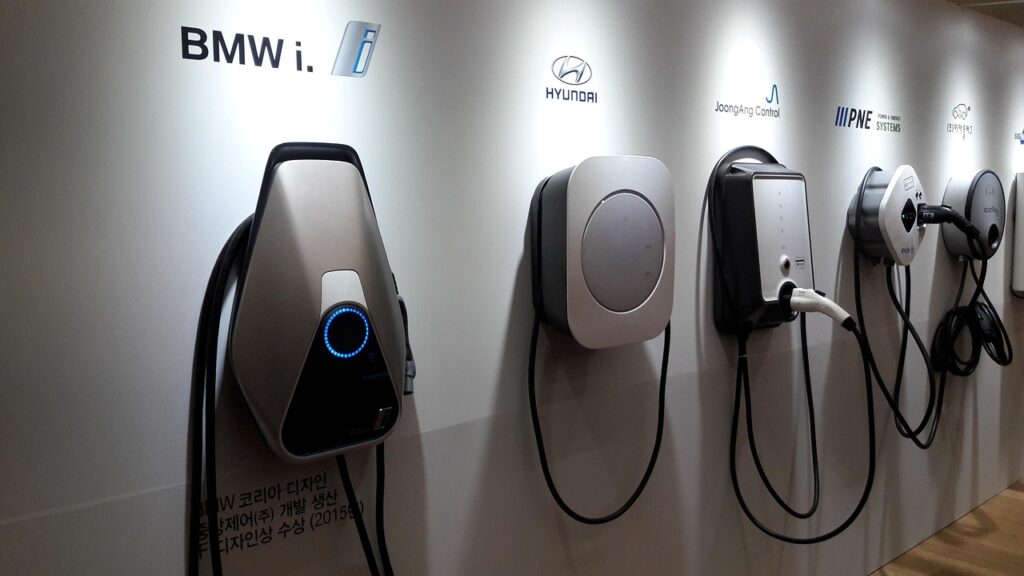
Comparison Table: Best EV Chargers for Home (2025)
|
Product |
Max Amps |
Smart Features |
Plug Type |
Best For |
Price Range |
|---|---|---|---|---|---|
|
ChargePoint Home Flex |
50 |
Yes (Advanced App) |
NEMA 14-50/Hardwired |
Overall performance & app UX |
$549–$599 |
|
JuiceBox 48 |
48 |
Yes (Voice + App) |
Hardwired |
Power users with one EV |
~$599 |
|
Tesla Wall Connector Gen 3 |
48 |
Yes (Tesla App) |
Tesla NACS |
Tesla owners |
~$475 |
|
Emporia Smart Charger |
48 |
Yes (Solar + Energy Tracking) |
NEMA 14-50 |
Smart homes w/ solar setups |
~$399 |
|
Grizzl-E Duo |
40 x 2 |
No |
NEMA 14-50 |
Two-car households |
~$699 |
Which Home EV Charger Is Best for You in 2025?
Choosing the right EV charger comes down to how you drive, what you drive, and where you live. All of the chargers on this list are reliable, safe, and compatible with today’s EVs — but some are a better match for specific needs.
Here are our top picks based on real-world use cases:
Best Overall: ChargePoint Home Flex
A smart, adjustable charger with the most intuitive app and broad EV compatibility. Ideal for homeowners who want a reliable long-term investment with detailed energy tracking. Easy integration, fast charging, and sleek design make this the clear winner for Tesla households.
Best for Tesla Owners: Tesla Wall Connector Gen 3
Easy integration, fast charging, and sleek design make this the clear winner for Tesla households.
Best Budget Smart Charger: Emporia Level 2
Packed with energy monitoring and solar-ready features at a price under $400. A solid choice for cost-conscious EV owners, especially those with solar panels or smart home setups.
Best Dual-Vehicle Solution: Grizzl-E Duo
Rugged and reliable, with the ability to charge two EVs simultaneously. Perfect for growing EV households.
Still Not Sure Which One to Choose?
Start by checking your panel’s amperage capacity, whether you want plug-in flexibility or a hardwired setup, and if smart scheduling matters for your electric bill.
FAQs About Home EV Chargers in 2025
Level 1 chargers plug into a standard 120V outlet and offer very slow charging, often adding just 3–5 miles of range per hour.
Level 2 chargers use a 240V outlet and provide significantly faster charging speeds, typically 25–40 miles of range per hour. Most homeowners upgrade to a Level 2 for daily use.
Most non-Tesla EVs use the J1772 plug, which nearly all Level 2 chargers support. Tesla vehicles use the NACS plug but come with a J1772 adapter, and most chargers are compatible.
Yes, especially for hardwired models or if your electrical panel needs an upgrade.
Plug-in models (NEMA 14-50) may not require panel modifications, but it’s still smart to have an electrician confirm capacity and safety.
Yes, many smart chargers, such as the Emporia Level 2 and Ohme Home Pro, offer solar sync or load balancing features. These let you prioritize solar input when available, optimizing your energy use.
Installation can range from $500 to over $1,500, depending on panel upgrades, wiring distance, and whether the charger is hardwired or plug-in.