
Upgrading an electrical panel is often a necessity and one of the most important electrical investments a homeowner can make. Your home’s electrical panel is the main distribution point for every circuit in your home, and when it can no longer support the electrical load, you start seeing signs ranging from nuisance breaker trips to legitimate safety concerns.
As a master electrician who upgrades panels across Newmarket, Aurora, Bradford, and the GTA overall, I regularly meet homeowners who are unsure whether their panel is still safe, whether it meets current Ontario Electrical Safety Code requirements, and what a realistic electrical panel upgrade cost is. This guide explains the cost ranges, the factors that influence pricing, and what homeowners should expect during the process.
Cost to Replace Electrical Panel at a Glance
Before reviewing individual scenarios, here is a general overview of common electrical panel upgrade costs in Ontario. These ranges include labour, permits, and utility coordination.
|
Service Type |
Typical Cost Range (CAD) |
|---|---|
|
100A to 200A upgrade |
2,800 to 4,500 |
|
Fuse box to breaker panel |
1,800 to 5,800 |
|
200A upgrade with new mast or meter base |
4,000 to 6,500 |
|
Full upgrade with partial rewiring |
6,000 to 10,000+ |
|
400A residential service |
5,000 to 12,000 |
These figures reflect common homeowner questions regarding breaker panel replacement cost, electrical panel replacement cost Ontario, and cost to change electrical panel.
Why Homes in Ontario Often Need a Panel Upgrade
According to the 2021 Census of Population conducted by Statistics Canada, approximately 644,080 private dwellings in Ontario were built between 1991 and 2000.
Many homes built before the mid-1990s still operate on 60-amp or 100-amp service, which is not designed for today’s electrical demand. Modern homes frequently require 200-amp service, especially if the homeowner plans to install:
- Electric vehicle chargers
- Heat pumps or electric heating
- Hot tubs or saunas
- Air conditioners
- Additional kitchen appliances
- Finished basements
- Workshops or hobby equipment
Older fuse panels, aluminum wiring, and overcrowded breaker panels also push homeowners toward a necessary upgrade. In many cases, insurance companies now require a minimum 100-amp or 200-amp panel for continued coverage.
Signs Your Electrical Panel Should Be Upgraded or Replaced
Electrical panels generally last 25 to 40 years, but age is not the only factor. Homeowners should take a closer look if they notice:
- Breakers tripping under normal load
- Lights dimming when major appliances start
- Buzzing or crackling sounds from the panel
- Scorch marks, rust, or heat around the panel
- A panel with no remaining breaker spaces
- A fuse box instead of a breaker panel
- Fuse boxes and electrical panels manufactured by Federal Pacific or Zinsco are known for documented safety problems and should be replaced.
If any of these issues are present, an inspection is recommended. Some conditions are safety-related, while others are tied to code or insurance compliance.
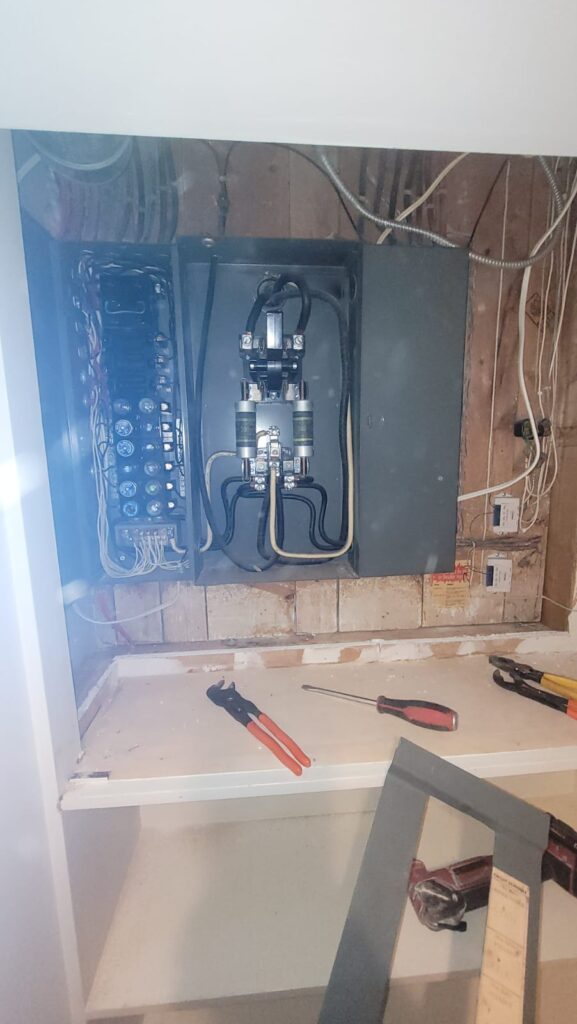
What Is Included in a Professional Panel Upgrade
A proper upgrade is more than replacing a box on the wall. A complete 100- to 200-amp upgrade in Ontario typically includes:
- Removal of the existing panel
- Installation of a new CSA-approved breaker panel
- Upgraded grounding and bonding
- Replacement of service mast, meter base, or main disconnect if required
- Coordination with Alectra Utilities for temporary disconnection and reconnection
- ESA permit, inspection, and certification
- Reconnecting and labeling all existing circuits
- Testing and verification of proper operation
Every step must meet the Ontario Electrical Safety Code. Homeowners should ensure their contractor is an ESA-Licensed Electrical Contractor authorized to take out permits.
Cost to Upgrade an Electrical Panel in Ontario
If any of these issues are present, an inspection is recommended. Some conditions are safety-related, while others are tied to code or insurance compliance.
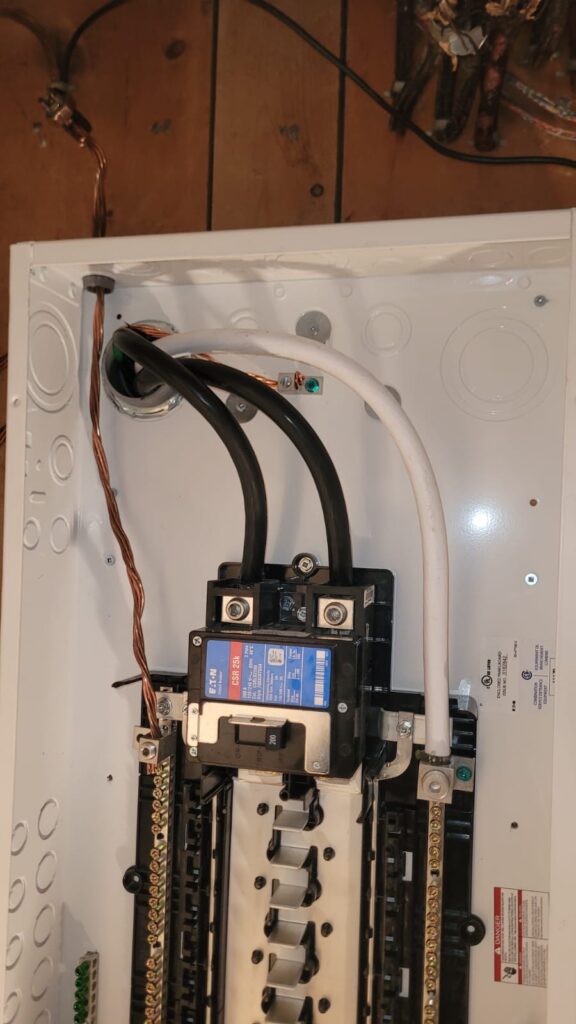
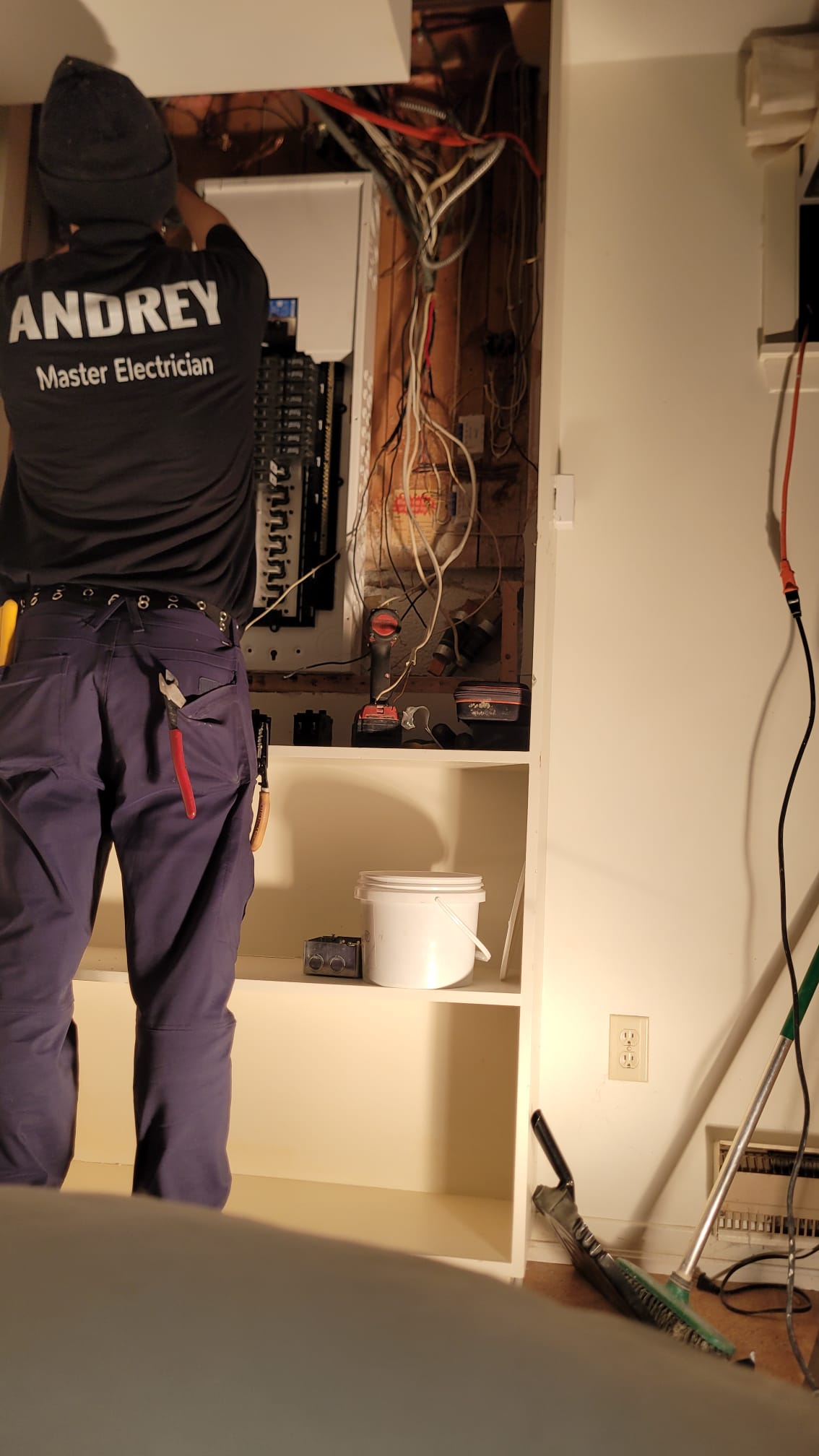
Electrical panel upgrades ESA Permits
A panel upgrade must be done under permit. Homeowners should confirm this is included in the quote.
Typical ESA permit fees: $300 to $500
Subpanels Cost and When They Are Recommended
It is important to understand, that a subpanel adds circuit capacity but does not increase total amperage. It is often installed when the main panel has no remaining space or when a homeowner needs dedicated circuits in another area of the house. Common reasons when subpanels are recommended instead of panel upgrade are:
- When the main electrical panel is at its breaker capacity but the service amperage (for example, 100 or 200 amps) is still adequate for the home’s load.
- When you are adding a new area that needs several dedicated circuits in one location, such as a finished basement, attic, major addition, or detached garage/workshop.
- When long wire runs from the main electrical panel would be impractical or messy, and a nearby subpanel can shorten circuits and simplify future changes.
- When you are installing power-hungry equipment (EV charger, woodworking shop, hot tub, or home gym) in a specific part of the property and want those circuits grouped and isolated for convenience and troubleshooting.
- When you want better organization and labeling of circuits in a multi-unit or multi-use space (for example, creating a subpanel for a rental suite, home office, or accessory dwelling).
- When you are planning staged upgrades: the main service is adequate today, but a subpanel lets you add circuits now and leaves open the option to increase main service later if loads grow.
Typical sub-panel installation cost:
- 50-amp subpanel: $400 to $1,000
- 100-amp subpanel: $600 to $1,500
- 150-amp subpanel: $800 to $2,000
Relocating an Electrical Panel and Relocation Cost
Electrical panels installed in non compliant or difficult to access areas may need to be relocated. This often occurs in older homes where panels were placed in closets, washrooms, or cramped mechanical spaces. Relocation improves accessibility and ensures the installation meets Ontario Building Code and Electrical Safety Code requirements.
Electrical panel relocation cost range from:
Costs depend on the distance the panel must be moved and the amount of rewiring required.
- Minor relocation: $800 to $1,200
- Full relocation with rewiring: $1,500 to $3,000
FAQs About Electrical Panel Upgrade Cost
Not always. However, wiring must meet today’s safety standards and be compatible with the new panel. Costs for rewiring vary:
Partial rewiring: $1,500 to $4,000
Full home rewiring: $3,800 to $10,250
Wiring cost per square foot: $8 to $10
Rewiring is typically required if the home has aluminum or deteriorated wiring.
A standard 100-amp to 200-amp upgrade typically takes one full working day, plus time for inspection and reconnection from the utility.
Yes. In Ontario, every service or panel upgrade must be completed under an ESA permit. ESA will review the work to ensure it meets the Ontario Electrical Safety Code before it can be closed.
No. A new panel requires new breakers that are designed and certified for that specific panel. Reusing old breakers is not compliant and is not permitted under ESA standards.
A panel upgrade replaces the breaker panel itself. A service upgrade involves increasing the amperage capacity, upgrading the meter base, service mast, and incoming utility service. Many homes require both to reach 200 amps.
Utility fees vary by region. Some utilities charge for temporary disconnects, while others do not. The electrician should arrange this as part of the upgrade process.
The upgrade does not reduce electricity consumption. It does improve safety and reliability. Any reductions in energy use would come from replacing older appliances or making energy-efficiency upgrades, not the panel itself.
The required size depends on calculated electrical load. Electricians use a load calculation formula based on the Ontario Electrical Safety Code. Larger homes with multiple HVAC systems, hot tubs, EV chargers, or commercial tools may require 300 or 400 amps.
If the wiring is in good condition and meets current code, it is usually compatible with the new panel. However, aluminum wiring, undersized feeders, or deteriorated insulation may require replacement.
Possibly. If the panel is recessed into finished walls or if rewiring is involved, minor drywall removal may be necessary. Electricians do the electrical work, and drywall repair is handled separately.
Yes. Inspectors, buyers, and insurance companies all check service capacity. A modern 200-amp panel is a recognized safety and reliability upgrade.
Conclusion
An electrical panel upgrade is a long-term investment in safety, capacity, and home value. Costs vary based on amperage, wiring condition, panel location, and utility requirements, but most Ontario homeowners can expect a range between $2,800 and $6,500, with larger upgrades reaching higher.
A proper assessment from a licensed electrician ensures the work meets code, supports your electrical needs, and passes ESA inspection. If you’re considering a electrical panel upgrade in Newmarket or the surrounding area, schedule a site visit for an accurate, detailed quote based on your home’s electrical load and service capacity.